How-to
Where to put an inflatable hot tub: base ideas
Published
Note: This page contains affiliate links. If you buy through them we may earn a commission at no extra cost to you. Learn more
In short
An inflatable hot tub needs a flat, level, smooth base that can take its filled weight, often well over a tonne with bathers. Patio slabs or a concrete pad are best. Decking can work if someone qualified confirms it takes the load. Gravel needs to be compacted, levelled and covered with a mat. Always lay a ground sheet and ideally an insulating mat.
Products for this job
Compare all 6 productsMSpa Tidal: semi-rigid 6 seater, 930 L
Check price on AmazonAffiliate linkBestway Santorini HydroJet Pro: 7 seats, 1,190 L
Check price on AmazonAffiliate linkBANGBANGJI 6 person: drop-stitch, 1,400 W heater
Check price on AmazonAffiliate link
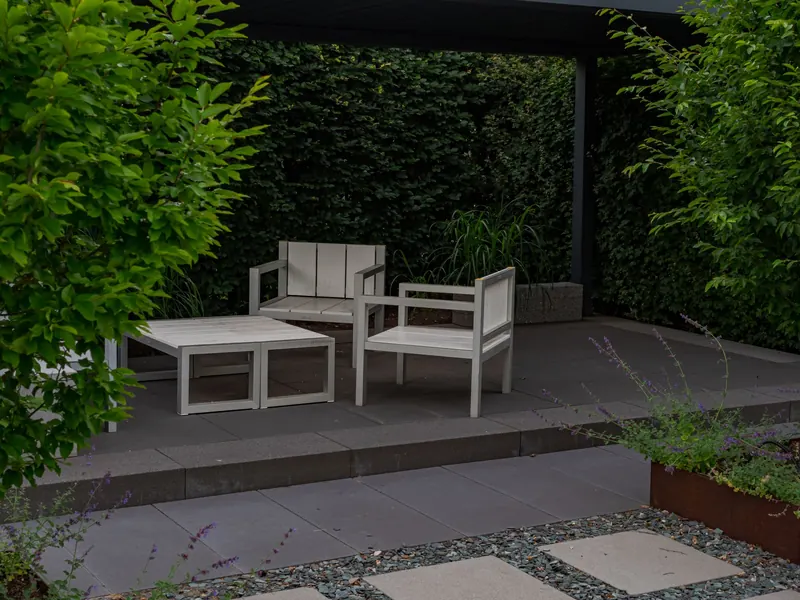
The base is the most important decision when setting up an inflatable hot tub. A filled tub is heavy, and an uneven or soft base strains the seams, lets the tub lean and can damage the liner on sharp stones. The base also affects heat loss, because cold paving draws heat out through the floor. This guide compares the usual base options, shows how to work out the load per square metre and covers mats and ground protection.
Work out the filled weight
Water weighs about 1 kg per litre. Add the empty tub and the people in it, then divide by the footprint area to get the load per square metre. A round tub's area is pi times the outer radius squared, in metres. A square tub's area is length times width.
The table uses listing figures for two Lay-Z-Spa tubs and assumes four adults at 80 kg each, as an illustration.
- Level concrete slab
- Decking: check it is rated for the load
- Compacted, level gravel with a mat
| Tub | Water | Tub weight | Bathers | Total | Footprint | Load |
|---|---|---|---|---|---|---|
| Lay-Z-Spa Milan, 196 cm round | 916 kg | 38 kg | 320 kg | About 1,274 kg | About 3.0 m2 | About 422 kg per m2 |
| Lay-Z-Spa Hawaii, 180 cm square | 795 kg | 54 kg | 320 kg | About 1,169 kg | About 3.25 m2 | About 360 kg per m2 |
Base options compared
| Base | Good points | Watch out for |
|---|---|---|
| Concrete pad | Strong, level, long lasting | Needs to be laid level and cured |
| Patio slabs | Strong, common in UK gardens | Check it is level; lay a mat for insulation |
| Decking | Looks good, warmer underfoot | Must be checked for the load by someone qualified |
| Compacted gravel | Drains well, cheaper to lay | Needs compacting, a level edge and a mat on top |
| Interlocking foam or rubber tiles | Insulate and protect the liner | Go on top of a firm base, not instead of one |
| Grass | Free | Becomes uneven and damp; not recommended long term |
Patio slabs and concrete
A level concrete pad or a well laid patio is the best base for most UK gardens. Check level with a long spirit level in both directions; a slight fall for drainage is normal, but the tub should not visibly lean. Sweep it clean before laying the ground sheet.
Paving gets cold in winter and draws heat out through the floor of the tub. An insulating mat or foam tiles under the ground sheet reduce this and protect the liner from grit.
Decking
Decking is popular for hot tubs, but a filled tub concentrates a lot of weight in one area. Standard garden decking is not always built for that. Before placing a tub on decking, have someone qualified, such as a builder or structural engineer, confirm that the joists, posts and footings can carry the load you have worked out.
If the deck is approved, use a mat to spread the load slightly and protect the liner from board edges and screw heads.
Note:Do not put a filled hot tub on decking, a balcony or a roof unless someone qualified has confirmed it can take the load. Keep the pump and plug on a firm, dry surface.
Gravel and other options
Gravel can work if it is properly compacted and levelled, with an edge to stop it spreading. A layer of sand or a membrane topped with a firm board or mat gives a smooth surface for the liner. Loose gravel straight under a tub is uncomfortable to sit on and can shift.
Grass is a short term option at best. It soon becomes uneven and damp under the tub, and you will lose more heat into the ground. If you must use it, choose the flattest spot and lay a thick mat.
- 1
Mark out the footprint plus a margin round the edge.
- 2
Remove turf and soft soil.
- 3
Lay and compact a sub-base, then gravel or sand.
- 4
Level carefully and add an edge restraint.
- 5
Lay a mat and the ground sheet before the tub.
Siting tips
Our 6 person guide lists outer sizes so you can match a tub to your base.
- Within reach of an RCD protected outdoor socket, without an extension lead.
- Away from overhanging trees that drop leaves.
- With space to walk round, reach the pump and lift the cover.
- Sheltered from strong wind where possible, which cuts heat loss.
- With access for a hose to fill and a route to drain.
Frequently asked questions
Can you put a hot tub on gravel? Yes, if the gravel is compacted, levelled and topped with a smooth mat or board.
Can you put a hot tub on a deck? Only if someone qualified confirms the deck can carry the filled weight.
Do I need a hot tub base mat? It is strongly advised. A mat protects the liner and reduces heat loss through the floor.
How much does a filled hot tub weigh? Often more than a tonne with water, tub and bathers. Work it out from your tub's litres.
What you need
- Check price on AmazonAffiliate link
MSpa Tidal: semi-rigid 6 seater, 930 L
- Check price on AmazonAffiliate link
Lay-Z-Spa 60001: 4 seats and 669 L